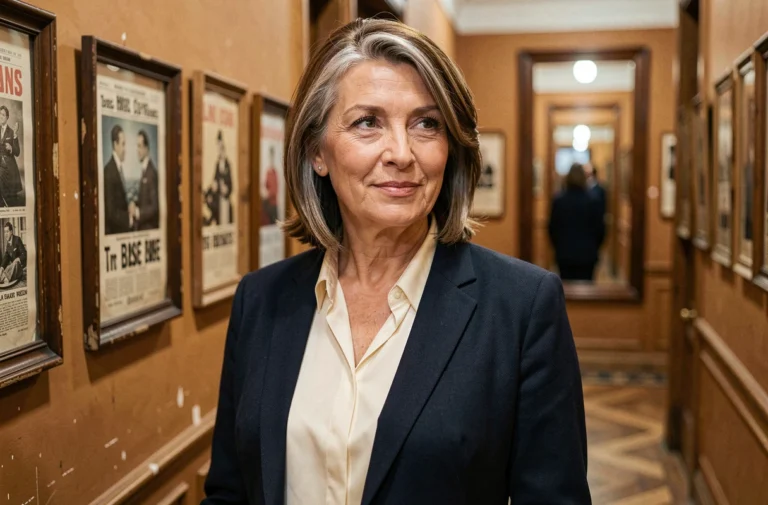
The French media landscape has been shaped by personalities who have defined the identity of journalism in France. Among them, Patrick Poivre d’Arvor and Claire Chazal stand out. PPDA, with his unique style, was for a long time the face of the 8 PM news on TF1, captivating millions of viewers every evening. Claire Chazal, for her part, elegantly embodied the weekend news, becoming a reassuring and respected figure. Their influence goes beyond the presentation of news; they have helped define the standards of television journalism while remaining icons of popular culture.
The iconic careers of PPDA and Claire Chazal
Patrick Poivre d’Arvor, former star of TF1’s news, long embodied the authority and closeness required of a news presenter. His career, marked by audience success, has also been marred by controversies, including serious allegations of rape and sexual assault. PPDA managed to create a unique bond with the public, becoming a familiar face of televised news in France.
Claire Chazal, an iconic journalist and talented presenter, shared her life with Patrick Poivre d’Arvor, giving birth to their son François Chazal Poivre d’Arvor. Their personal story added an extra dimension to media interest, as François was publicly acknowledged by PPDA ten years after his birth. The relationship between Claire Chazal and PPDA, described as toxic, contributed to the French fascination with these two personalities.
Claire Chazal’s impact on the French audiovisual landscape remains significant, even after her departure from TF1, following the decision of Nonce Paolini, then the strongman of the channel. Her elegance and professionalism have led to speculation about her being considered for a high position, such as Minister of Culture in the government of a potential new Prime Minister, Gabriel Attal.
Anne-Claire Coudray, who took over from Claire Chazal in presenting the weekend news on TF1, continues the journalistic legacy left by her predecessors. This transition marks a continuity in the channel’s commitment to providing quality information while reflecting the necessary renewal within media institutions.

Impact and legacy in the French media landscape
Nonce Paolini, businessman and leading figure of TF1, left his mark on the channel by sidelining Claire Chazal from the news broadcast. This decision, symptomatic of internal media changes, sparked reflections and debates on the sustainability of journalistic figures on screen. Patrick Le Lay and Étienne Mougeotte, respectively former CEO and former vice-president of TF1, also shaped, alongside Paolini, the iconic television news that remains a reference in the daily lives of citizens.
The tumultuous relationship between Patrick Poivre d’Arvor and Claire Chazal has captivated the French public beyond their private sphere. Their interactions, often exposed to the spotlight, have contributed to the construction of their personal and professional myth. Claire Chazal’s defense of PPDA despite the allegations against him raises questions about the ties that bind media personalities to their personal stories.
Claire Chazal’s departure from TF1 was experienced as the end of an era by many viewers, and she could see a political reincarnation. Her name is frequently mentioned for the Ministry of Culture in the government of a potential Prime Minister Gabriel Attal, highlighting the permeability between journalism and the political sphere, and the recognition of her expertise beyond the news broadcast.
Anne-Claire Coudray, by taking Claire Chazal’s place in presenting the weekend news on TF1, does not merely fill a role; she positions her actions within a journalistic continuity while bringing her own touch to the edifice. The succession is assured, thus guaranteeing the public a transmission of the values and standards that have made her predecessors renowned.