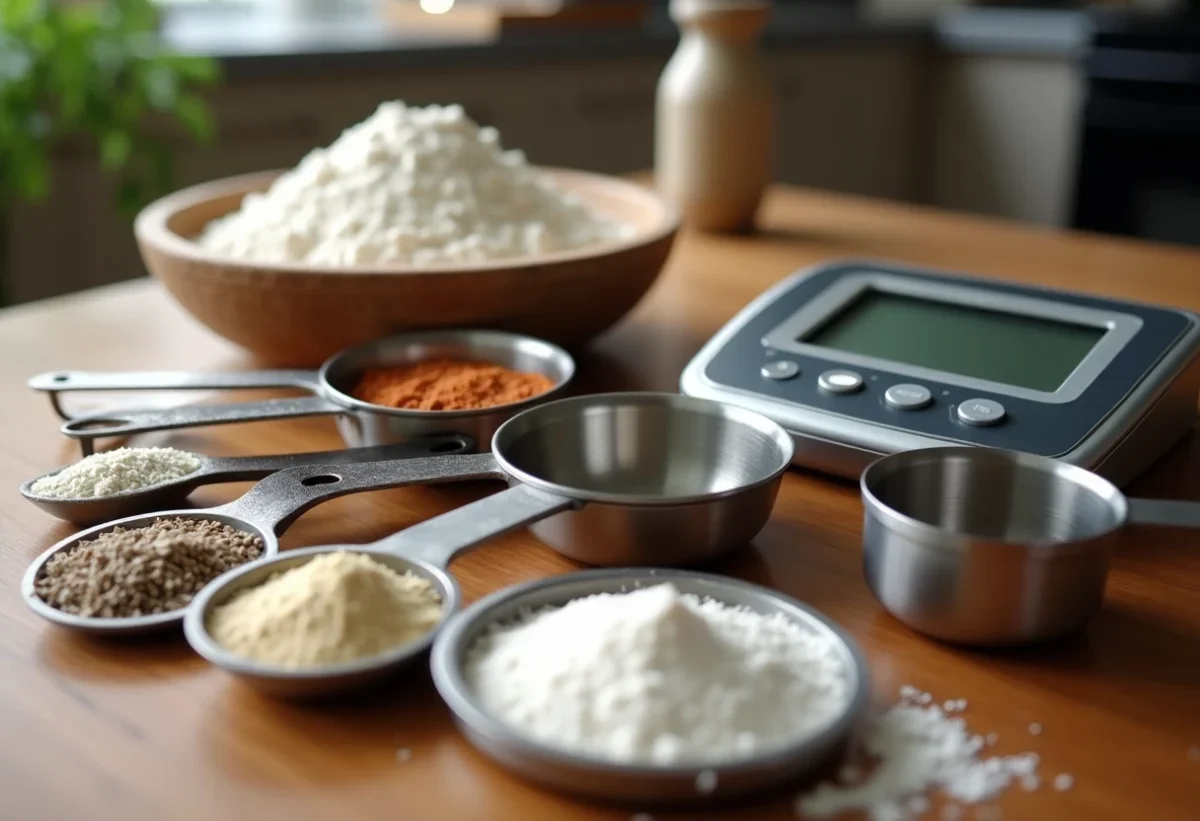
In cooking, the precision of volume measurements is essential for successfully executing a recipe. Whether it’s measuring a cup of flour or a spoonful of sugar, an inaccurate conversion can alter the taste and texture of your dishes. Cooking with international recipes often involves converting volume units, such as switching from fluid ounces to milliliters or cups to grams.
To avoid approximations, it is helpful to equip yourself with reliable conversion tools and to know common equivalents. Mobile apps and conversion charts can simplify this task, making cooking more accessible and results more consistent.
Common Measurement Units in Cooking
In cooking, the use of measurement units is varied. Precise conversions between these units are crucial to ensure successful recipes. Here are some of the most common measurement units:
- Centiliters (cl): 1 cl equals 10 milliliters (ml).
- Milliliters (ml): 10 ml equals 1 cl.
- Deciliters (dl): 1 dl equals 100 ml.
- Grams (g) and Kilograms (kg): 1000 g equals 1 kg.
- Teaspoon (cc): 1 cc equals 5 ml.
- Tablespoon (cs): 1 cs equals 15 ml.
- Tea cup: 1 tea cup equals 200 ml.
- Medium glass: 1 medium glass equals 200 ml.
- Coffee cup: 1 coffee cup equals 100 ml.
- Wine glass: 1 wine glass equals 100 ml.
- Medium bowl: 1 medium bowl equals 250 ml.
- Large bowl: 1 large bowl equals 500 ml.
For example, the conversion of a quarter liter to cl is simple: 25 cl. By knowing these equivalents, you can quickly adapt your recipes, whether they come from a French cookbook or an international source. Use conversion tools or charts to avoid mistakes and ensure maximum accuracy in your preparations. 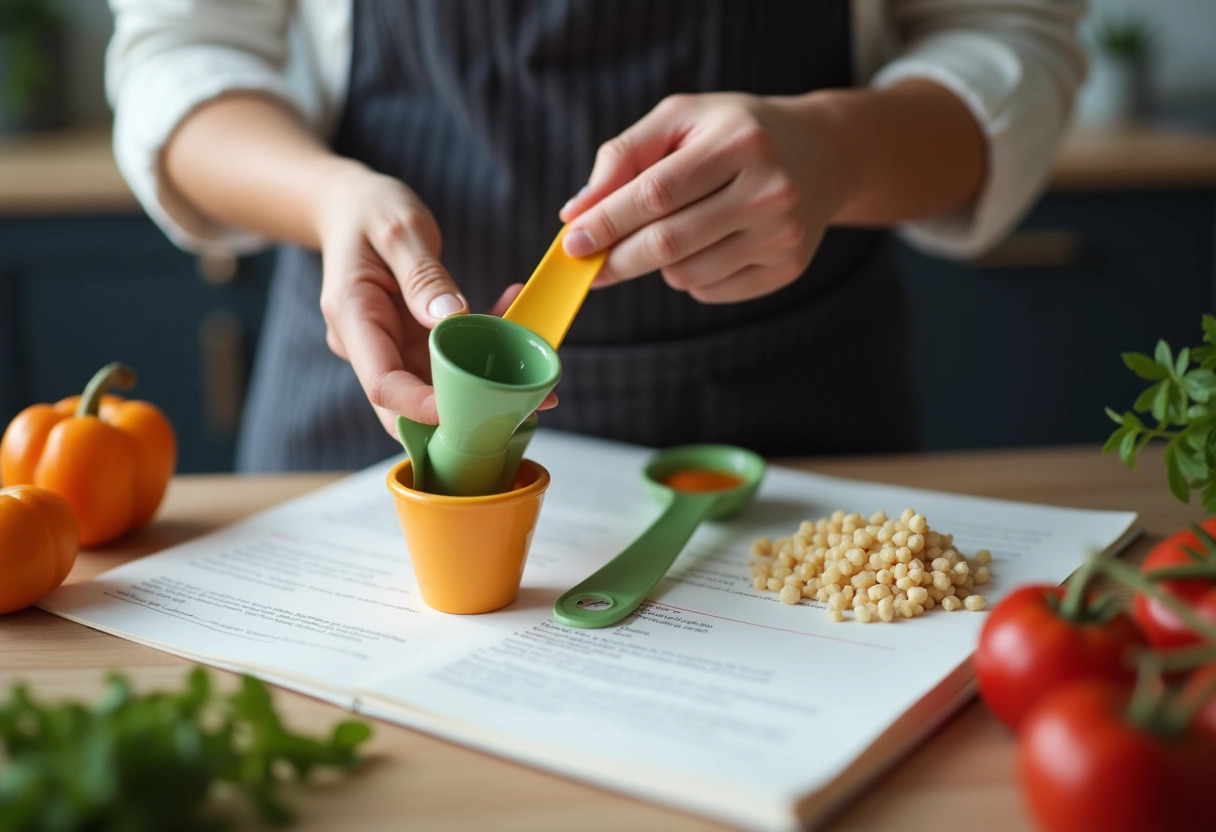
How to Measure Accurately in Cooking?
Accuracy in cooking is not limited to volume units. Temperatures and ingredients must also be measured precisely to ensure consistent culinary results. Using appropriate tools like kitchen scales and thermometers is essential.
Temperatures
It is often necessary to convert between Celsius and Fahrenheit temperature scales. Here are some common conversions:
- 0°C equals 32°F
- 100°C equals 212°F
- 180°C equals 350°F
- 210°C equals 410°F
- 240°C equals 460°F
Ingredients
Ingredients vary in density and weight. For example, 1 egg equals about 50 grams. Using precise measurements allows for better recipe management.
Eggs
- 1 egg: 50 grams
- 1 egg white: 30 grams
- 1 egg yolk: 20 grams
Vegetables
- 1 carrot: 100 grams
- 1 medium zucchini: 200 grams
- 1 clove of garlic: 6 grams
- 1 medium onion: 100 grams
- 1 medium potato: 100 grams
- 1 tomato: 150 grams
Fruits
- 1 pineapple: 2 kilograms
- 1 apricot: 50 grams
- 1 banana: 150 grams
- 1 lemon: 100 grams
- 1 clementine: 70 grams
- 1 melon: 700 grams
- 1 orange: 200 grams
- 1 grapefruit: 400 grams
- 1 peach: 150 grams
- 1 pear: 120 grams
- 1 apple: 175 grams
Converting measurements is not just a matter of convenience but a necessity for achieving precise and consistent culinary results.