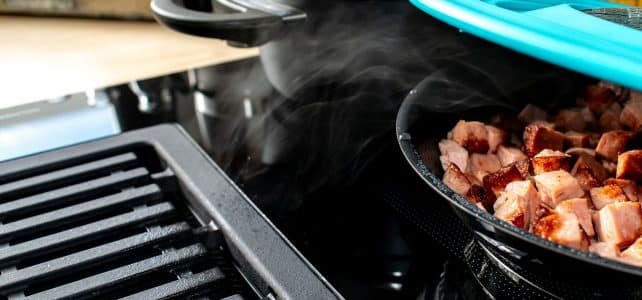
A professional hood is an essential element in restaurant kitchens. It plays a crucial role in maintaining a healthy and safe working environment. This article will explore in detail the different aspects of professional hoods, how they work, their benefits, and selection criteria.
Definition and Functioning of a Professional Hood
A professional hood like ventil eco is a ventilation device designed to extract smoke, steam, grease, and odors produced during cooking. It is installed above cooking equipment such as stoves, grills, and fryers. The hood sucks in air laden with particles and contaminants, filters it, and expels it outside the building.
The operation of a hood relies on a filtration and extraction system. Grease filters capture airborne grease particles. Then, a powerful fan draws in the filtered air and expels it outside. Some hoods are equipped with air recycling systems, where the air is filtered and returned to the kitchen after purification.
Types of Professional Hoods
There are several types of professional hoods, each suited to specific needs. The main categories include:
- Wall-mounted hoods: Fixed to the wall, they are ideal for small kitchens.
- Central hoods: Suspended from the ceiling, they are suitable for large kitchens with cooking islands.
- Induction hoods: Used to capture smoke directly at the source, they are effective for specific cooking equipment like fryers.
- Make-up air hoods: Equipped with a fresh air supply system to balance the air pressure in the kitchen.
Benefits of Professional Hoods
Installing a professional hood offers numerous advantages for restaurants:
- Improvement of air quality: By eliminating smoke, grease, and odors, the hood contributes to a healthier and more pleasant working environment.
- Reduction of fire risks: Grease filters reduce the accumulation of flammable grease in ducts, thereby minimizing fire risks.
- Compliance with safety standards: Professional hoods are designed to meet fire safety and hygiene regulations.
- Employee comfort: Clean air and controlled temperature improve the comfort and productivity of kitchen staff.
Criteria for Selecting a Professional Hood
The choice of a professional hood should consider several criteria:
- Size and configuration of the kitchen: The hood must be suitable for the kitchen layout and the size of the cooking equipment.
- Suction power: The extraction capacity of the hood must match the kitchen’s needs, depending on the amount of smoke and steam produced.
- Type of filtration: Grease filters, activated carbon filters, or UV filters should be chosen based on the contaminants to be eliminated.
- Noise level: The noise generated by the hood should be minimal to avoid disrupting kitchen work.
- Maintenance and upkeep: The ease of cleaning and replacing filters is an important aspect to consider.