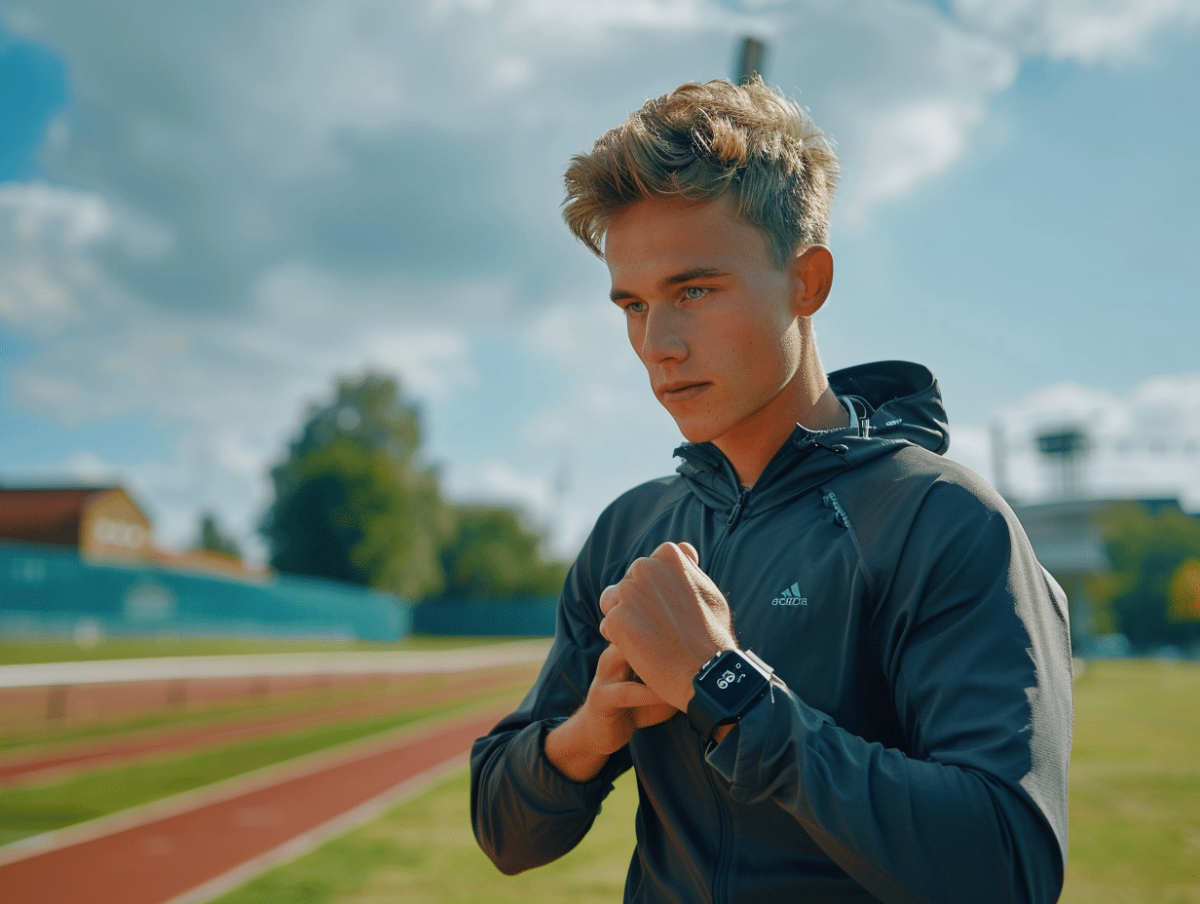
Evaluating athletic performance has become a central element for both amateur and professional athletes. Whether for running, cycling, or swimming, accurately calculating the distances covered allows for tracking progress and adjusting training. Technological tools like GPS watches or mobile apps now provide precise and easy-to-use solutions. You need to understand the data collected in order to interpret it correctly. A good knowledge of the features of these devices can make all the difference between effective progress and stagnation.
Methods for Effectively Measuring Athletic Distances
For an accurate assessment of performance, several methods exist. The first involves using technological tools such as GPS watches and mobile apps. These devices allow you to measure distance covered, speed, and heart rate. They provide a comprehensive view of training by supplying precise data. Training load is divided into two categories: external load and internal load. External load is measured with objective indicators like kilometers, watts, or seconds. For example, an athlete who runs 10 km in 50 minutes can easily calculate their average speed by dividing the distance by the time: 10 km / 50 min = 0.2 km/min.On the other hand, internal load focuses on the physiological responses of the athlete. It is measured through parameters like heart rate and oxygen consumption. This data helps to better understand the effects of training on the body and adjust loads to avoid injuries and maximize performance. It is also essential not to base measurements solely on the kilometers covered. For example, maximum aerobic speed (MAS) is a key indicator for assessing endurance and performance in athletes. It is defined as the speed at which oxygen consumption reaches its maximum. For certain sports, it is relevant to measure distances in terms of effort and fatigue, and steps in kilometers.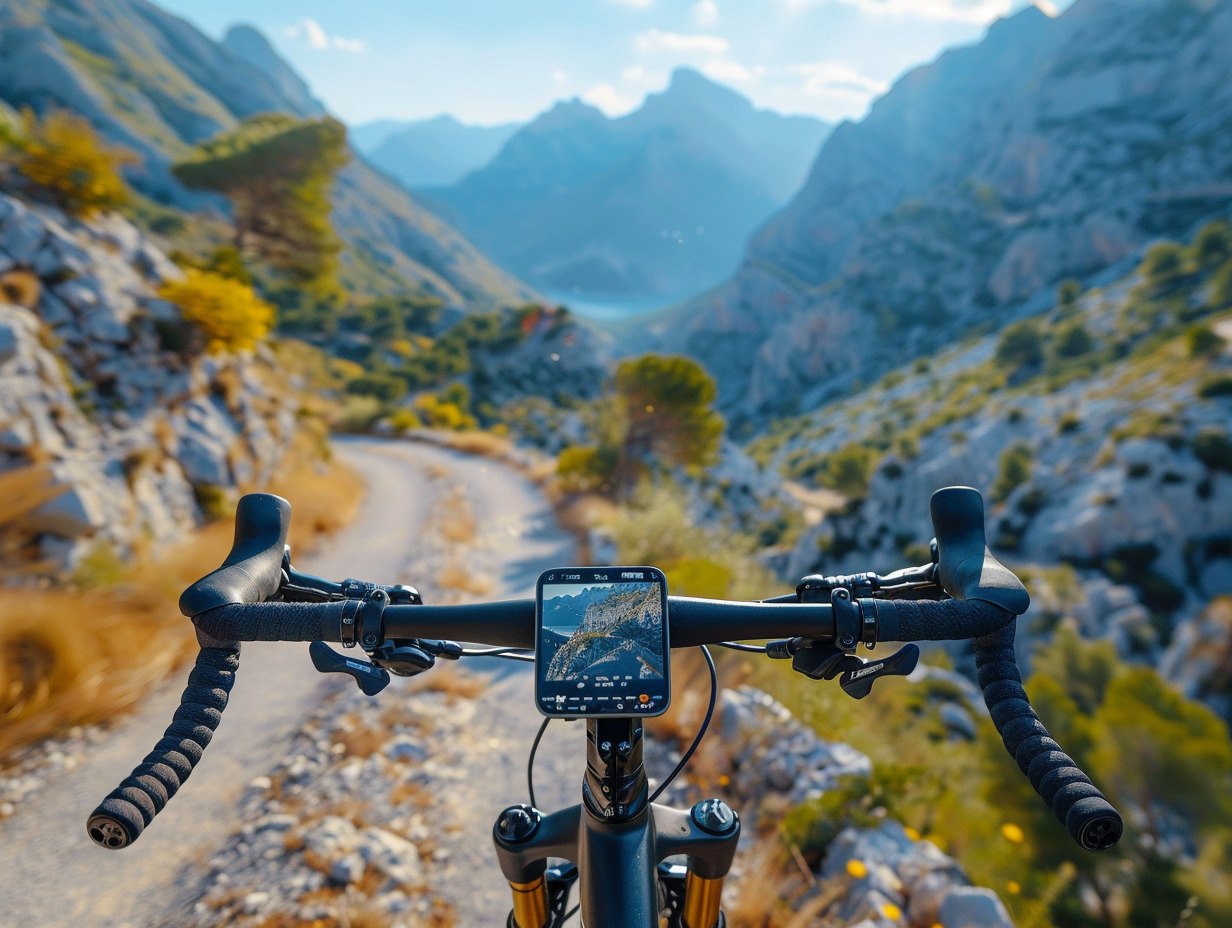
Technological Tools to Optimize Performance Tracking
Technological advancements have revolutionized the tracking of athletic performance. Various tools now allow for detailed and precise analysis of training sessions. Here are some essential devices:
- GPS Watches: these watches provide precise measurements of distance covered, speed, and heart rate. They also integrate advanced features like altitude tracking and real-time mapping.
- Mobile Apps: apps like Strava or Runtastic allow you to track your performance via your smartphone. They offer detailed analyses and comparisons with other athletes.
- Power Sensors: primarily used in cycling and running, these sensors measure the power generated by the muscles during exertion. They provide valuable data to adjust and optimize training.
Measurement tools are not limited to wearable devices. Data processing software allows for in-depth analysis of performance. For example, the RPE (Rating of Perceived Exertion) method is often used to assess the difficulty felt by the athlete. The RIR (Reps In Reserve) quantifies the number of repetitions the athlete can still perform before exhaustion.
Scientific Contributions
Researchers like Amandine Aftalion and Antoine Le Hyaric work on mathematical models to optimize athletic performance. Their studies provide a finer understanding of training and recovery dynamics. These models are used to adapt training loads according to individual goals.
| Name | Specialty | Institution |
|---|---|---|
| Amandine Aftalion | Applied Mathematics | Sorbonne University |
| Antoine Le Hyaric | Modeling | Sorbonne University |
| Mathias Pessiglione | Neurosciences | Brain Institute |
Technological tools and scientific contributions form an essential synergy for tracking and optimizing athletic performance.