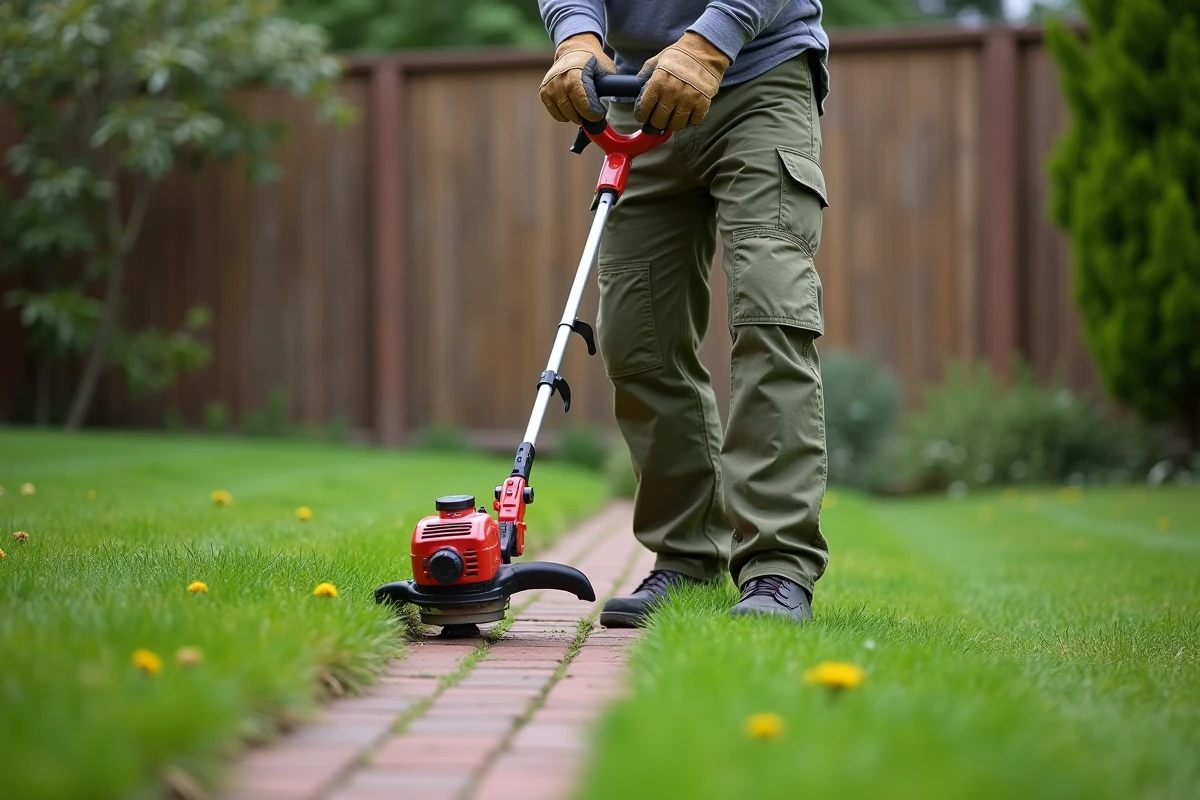
A thermal string trimmer is not chosen like a battery model. The 2-stroke or 4-stroke engine, the compatible fuel type, the cutting width, and the line feed system determine both the lifespan of the machine and the quality of the finish on the ground. Here we detail the technical points that make the difference between a relevant purchase and an underutilized tool.
Alkylate fuel or SP98: the choice that affects the longevity of the 2-stroke engine
The two-stroke engines powering most thermal string trimmers are sensitive to the ethanol content of the fuel. Since the widespread adoption of SP95-E10, issues with carburetor clogging and difficult starts have increased in small engines.
Stihl, Husqvarna, and Echo now explicitly recommend ready-to-use alkylate fuel or, if unavailable, SP98 without ethanol for their 2-stroke engines. Alkylate fuel is more expensive per liter, but it virtually eliminates gum deposits in the fuel system and extends the intervals between carburetor cleanings.
We recommend calculating the actual usage cost before purchase. A thermal string trimmer fueled with alkylate consumes little over a season of domestic maintenance. The price difference per liter is offset by reduced breakdowns and workshop visits. You will find detailed comparisons on coupebordurethermique.fr to refine this calculation according to your area.
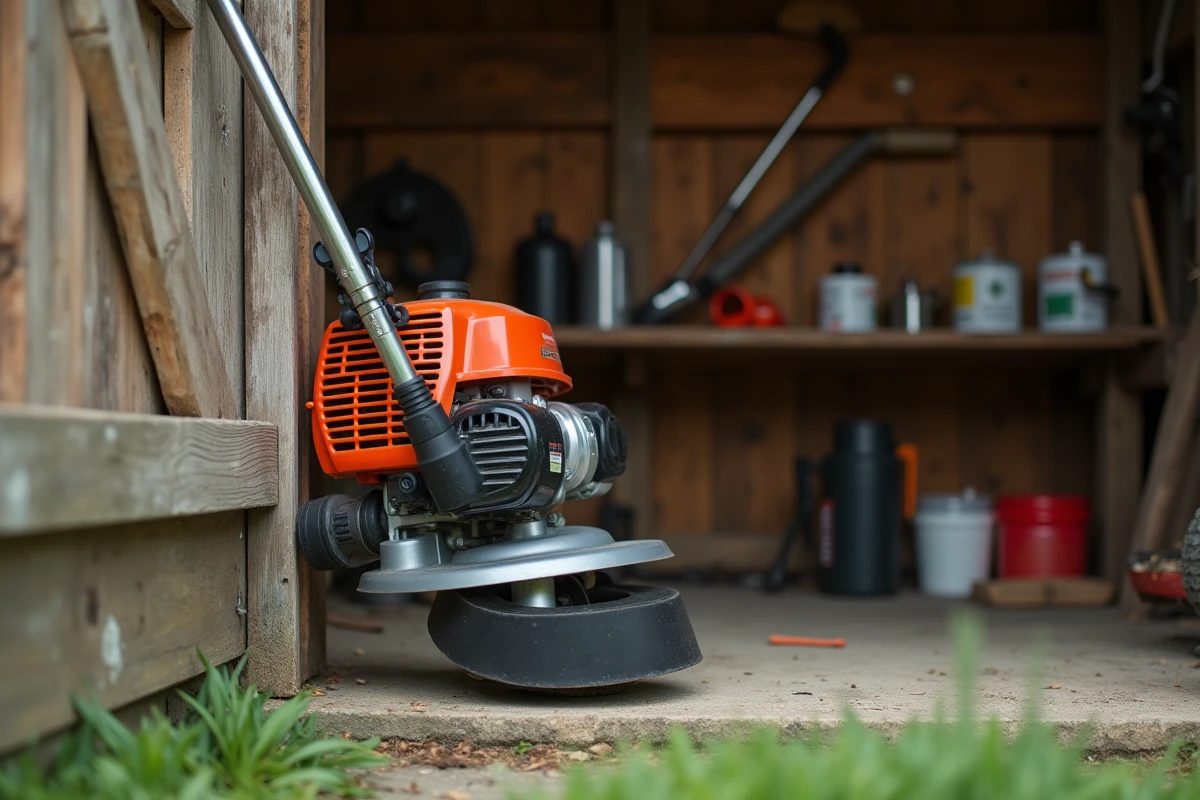
2-stroke or 4-stroke engine on a thermal string trimmer: technical arbitration
The two-stroke engine remains the standard on most consumer thermal string trimmers. It offers a better power-to-weight ratio, which is directly important when working with arms extended for half an hour or more.
The 4-stroke engine is heavier but vibrates less and does not require an oil/gas mixture. For intensive use (professional maintenance, sloped terrains, recurrent tall grasses), the 4-stroke reduces muscle fatigue and simplifies maintenance. However, for a modest-sized garden, the extra weight of the 4-stroke becomes a clear disadvantage without any real power benefit.
Vibrations and fatigue: an underestimated criterion
Manufacturers rarely display vibration values transmitted to the hands in a usable way. In practice, a well-balanced 4-stroke engine transmits significantly less vibration than an equivalent 2-stroke. For sessions exceeding twenty minutes, the difference is felt in the forearms and wrists.
Nylon line, blades, or knives: adapting the cutting head to the vegetation
The cutting system determines the type of vegetation that the string trimmer can effectively handle. Three configurations exist, each with a specific area of use:
- Round or serrated nylon line: suitable for fine grass and finishing along paths or flowerbeds. The serrated line offers a cleaner cut on slightly tough grasses but wears out faster when in contact with hard surfaces (walls, concrete edges).
- Reinforced nylon line or twisted line: designed for semi-woody grasses and dense regrowth. We use it on poorly maintained terrains where the classic round line breaks too quickly.
- Knife or plastic blade head: reserved for models compatible with brushcutters. It handles brambles, tall nettles, and young woody shoots but prohibits work close to mineral edges due to the risk of projections.
Most thermal string trimmers accept a head change. Check the compatibility of the angle drive with knife heads before purchase, as some entry-level models only accept nylon line.

Noise restrictions in residential areas: a decisive selection criterion
Several municipalities have tightened their municipal orders regarding noisy garden machines in recent years. Thermal string trimmers and brushcutters are explicitly targeted, with restricted time slots on weekends and frequent prohibitions in the evening.
The noise level of a thermal string trimmer far exceeds that of a battery model. In residential areas or condominiums, this significantly reduces the window of use to a few hours per week. For a user who can only work on Sunday mornings, this is a serious constraint to consider from the choice of motorization.
Noise-canceling headphones and hearing protection
Regardless of local regulations, wearing noise-canceling headphones is necessary after a few minutes of use. Thermal string trimmers produce a noise level that can damage hearing during prolonged sessions. A pair of attenuating earmuffs is sufficient for domestic use.
Seasonal maintenance of the thermal string trimmer: the technical gestures that matter
A well-maintained thermal string trimmer starts on the first or second pull, even after winter storage. The maintenance points that make a difference:
- Draining the fuel at the end of the season (or adding stabilizer if you keep alkylate fuel in the tank during winter).
- Replacing the spark plug each season, or as soon as starting becomes erratic. A fouled spark plug is the leading cause of non-starting in small 2-stroke engines.
- Cleaning the air filter every five to ten uses. A clogged filter enriches the mixture and accelerates engine fouling.
- Checking the protective casing and angle drive: a poorly lubricated angle drive will eventually seize, rendering the machine unusable.
A thermal string trimmer stored with E10 fuel in the tank for several months almost systematically develops carburetor problems upon restart. Emptying the tank and running the engine until it stops completely remains the most reliable method to avoid this classic breakdown.